Showing posts with label Science. Show all posts

Saturday, August 6, 2011

Sun-powered NASA spacecraft Juno begins 5-year trip to Jupiter

NASA has launched a probe on a five-year mission to Jupiter to learn more about the giant planet and how the solar system was formed. It's the first solar-powered mission to venture so far from the Sun.

The unmanned Juno spacecraft costing $1.1bn (£0.7bn), launched from Florida, will cruise beyond Mars to put itself in orbit around the gas giant in 2016.

Scientists said the spacecraft will study the giant planet's core, atmosphere, powerful magnetic field and auroras.

Once it reaches its target it will be the furthest-travelled solar-powered probe and the fastest man-made object in history after travelling at 160,000mph.

If you take everything else in our solar system (not including the sun), it would all fit inside Jupiter. In terms of understanding our solar system, NASA says, Jupiter's importance cannot be underestimated.

Now NASA is looking for the clues to help answer pressing questions about the early days of the solar system. Because whatever was in Jupiter at the beginning — more than 4.5 billion years ago, when the solar system was formed — is still there, scientists say, hiding in a mysterious gas giant made up of dust and gas left over by the Sun.

Thursday, August 4, 2011

Human brain may have reached its full capacity of intelligence

The human brain has reached the physical limits of intelligence and is physically impossible for us to become any smarter, according to researchers.
human-brain-intelligence-capacity
A team at Cambridge University, led by Professor Simon Laughlin, says this is because the people are unable to provide the amount of extra energy and oxygen needed to become more intelligent.

The scientists have based their findings after analysing the structure of the brain and worked out how much energy its cells use up.

"You pay a price for intelligence. Becoming smarter means improving connections between different brain areas but this runs into tight limits on energy, along with space for the wiring," said Ed Bullmore, a professor of psychiatry at Cambridge.

As increases in brain power require disproportionate increases in energy consumption, human intelligence faces tight constraints, the study said.

Researchers even claim that the human brain could shrink in size over time, towards our Neanderthal ancestors, in order to reduce the amount of energy it needs.

Speaking on the topic, Professor Simon Laughlin said, “We have demonstrated that brains must consume energy to function and that these requirements are sufficiently demanding to limit our performance and determine design.”

Researchers also claim that the human brain’s network of fibres that link different areas to one another can’t get any better.

Wednesday, August 3, 2011

Earth may once have had two moons

Two moons may have once circled the Earth in the same orbit until a slow-motion collision blended the larger object with a sister satellite one-thirtieth its mass to create the Moon we see today.
earth-moon-2011-august-finding-discovery
A whack from a smaller sibling could, it seems, account for one of the abiding mysteries about the Moon — why the side seen from the Earth is so different from its other hemisphere.

Researchers suggest the collision may explain the mysterious mountains on the far side of our Moon.

The scientists say the relatively slow speed of the crash was crucial in adding material to the rarely-seen lunar hemisphere.

The nearside is low and flat, with lava-filled basins that are readily visible as dark patches which early astronomers mistakenly labelled as ‘maria' (or seas). In 1959, the Soviet Union's Luna 3 became the first spacecraft to go behind the Moon and the photographs it sent back showed the far-side to be mountainous.

Later studies also showed that the Moon's crust was much thicker on the far-side. The nearside, on the other hand, has rocks rich in potassium, rare earth elements and phosphorous, which the other side lacked.

The moon was formed about 4.5 billion years ago, after a Mars-sized body slammed into the molten Earth and flung a ring of debris into space. Much of that debris coalesced into a rocky satellite, which was roughed up about half a billion years later by a barrage of asteroids and other interplanetary material, leaving scars in the form of craters.

But at what point the moon became lopsided, and how, is still unclear.

Some scientists speculated that the moon's internal dynamics pushed material around. Others wondered whether the mountains were created by debris ejected from a freshly smashed crater.

Tuesday, August 2, 2011

Remains of 20 million-year old ape unearthed in Uganda

Researchers working in Uganda say they have unearthed the well-preserved fossil skull of an ancient primate. The 20 million-year-old specimen comes from the site of an extinct volcano in Uganda's north-east Karamoja region.
20-million-year-old-ape-fossil-Uganda-2011-Aug
The skull belonged to a male Ugandapithecus major, an ancestor of today's great apes.

The expedition was led by Pickford, of the Collège de France in Paris, and professor Brigitte Senut of the Paris-based National Museum of Natural History, reported Uganda's New Vision website.

Preliminary studies of the fossil showed that the tree-climbing herbivore, roughly 10 years old when it died, had a head the size of a chimpanzee's, but a brain the size of a baboon's, Pickford said.

The team said their discovery at Napak XV is a ‘sub-complete’ Hominidae skull and it is believed to be aged between 19 and 20 million years.

The term Hominidae refers to a scienticic family classification which included chimpanzees, gorillas and orangutans which are closely related to humans.

The discovery will enhance understanding of the development of apes and humans, the scientists said.

Ugandan Tourism Minister Agnes Okiror said he believed the latest discovery would help put his country "on the map." Last year, researchers in Chad unearthed a 6—million—year—old hominid fossil, which was considered one of the great modern discoveries in the field, as it helped clarify the evolutionary chart.

The physics of the mysterious crop circles

There's no reason to think that Crop Circles are the work of aliens - particularly when human pranksters have already admitted to making them - but they're still mysterious... not to mention a fascinating junction point between physics and art.
crop-circles
Crop circles, elaborate designs that are etched into farmlands that are a thing of beauty when viewed from the air have long been determined to be the work of pranksters.

Crop circles have confounded farmers and scientists alike since they were first recorded in the 17th century, and now physicist Professor Richard Taylor says the phenomenon is growing alongside advances in technology.

Taylor says physics could hold the answer, with crop—circle artists possibly using the Global Positioning System (GPS) as well as lasers and microwaves to create their patterns, dispensing with the rope, planks of wood and bar stools, the journal Physics World reports.

Microwaves, Taylor suggests, could be used to make crop stalks fall over and cool in a horizontal position - a technique that could explain the speed and efficiency of the artists and the incredible detail that some crop circles exhibit, according to an Oregon statement.

And another question -- why does an academic feel the need to get caught up in the world of alien landing conspiracies?

Matin Durrani, editor of Physics World, said Taylor was "merely trying to act like any good scientist -- examining the evidence for the design and construction of crop circles without getting carried away by the side-show of UFOs, hoaxes and aliens."

Sunday, July 31, 2011

Trojan asteroid detected in the Earth's orbit

Unraveling of the wonders in outer space continues with the latest discovery of an asteroid that is expected to keep company with earth, for several hundred years.

A team of Canadian scientists have discovered a "Trojan" asteroid that is caught in a synchronized orbit with the Earth.

Trojans are asteroids that share an orbit with a planet, locked in stable orbits by a gravitational balancing act between a planet and the Sun. Neptune, Mars and Jupiter are known to have Trojans.

Two of Saturn’s moons share orbits with Trojans. Scientists had predicted Earth should also have Trojans, but they have been difficult to find because the Trojans are relatively small and appear near the sun from Earth’s point of view.

This diminutive asteroid has a diameter of just 300 metres but is called a Trojan because of its particular position in a stable spot — either in front of a planet or behind it. Because the asteroid and planet are constantly on the same orbit, they can never collide.

Currently, it is about 50 million miles away, and should come no closer than about 18 million miles.

Sunday, July 24, 2011

Scientists build Artificial Intelligence in test tubes

Scientists have now taken a major step towards creating artificial intelligence, not in a robot or a silicon chip, but in a test tube.

Researchers at the California Institute of Technology (Caltech) have created a circuit of interacting molecules that can recall memories based on incomplete DNA patterns, just like the human brain.

Supercomputers, robots and the human brain represent the artifacts of a long evolutionary chain stretching back to a soupy mass of molecules floating in Earth's oceans billions of years ago. Now researchers have gone back to the primordial ooze by creating a new type of artificial intelligence based on DNA inside of test tubes.

The neural network is made up of just four artificial neurons, as opposed to the human brain's 100 billion real ones.

To test the network, the scientists played a game with it. That game started with the network being trained to "know" four scientists, each one identifiable by a unique combination of yes/no answers to the same four questions (such as "Is the scientist British?"). Human players then chose one of those scientists, and provided the network with an incomplete set of the identifying answers. They did this by dropping DNA strands that were programmed to correspond to those answers, into water in a test tube that contained the neurons.

Communicating through fluorescent signals, the network would then either correctly identify the chosen scientist, it would indicate that it didn't have enough data to identify just one scientist, or it would state that the data didn't match any of the scientists.

Biochemical systems with artificial intelligence — or at least some basic, decision—making capabilities — could have powerful applications in medicine, chemistry, and biological research, the researchers say.

In the future, such systems could operate within cells, helping to answer fundamental biological questions or diagnose a disease.

The human brain consists of 100 billion neurons, but creating a network with just 40 of these DNA—based neurons — 10 times larger than the demonstrated network — would be a challenge, according to the researchers.

Saturday, July 23, 2011

Test on newborn babies believed to help predict teen trouble

The health test conducted on babies minutes after they are born may help detect whether a child will have trouble in school as a teenager, a new study has claimed.
newborn-baby-infant-2011-July
The study appears in the August issue of the journal Obstetrics and Gynecology.

Babies who get low scores on a test of heart, lung and brain function given just a few minutes after birth may be more likely to need special education as teenagers, suggests this new study from Sweden.

Researchers looked at 877,000 Swedish children and compared their school grades and graduation rates when they were teenagers with their Apgar scores and post-birth health. The Apgar test is a 10-point scale, and much research has shown that it reliably predicts how much medical care a newborn will need.

The researchers found that there is a relationship between having an Apgar score below 7 and having cognitive deficits later in life. They say better understanding the relationship may provide insights into what early problems might cause those deficits.

The Apgar system has been used in the delivery room since it was devised by American Dr Virginia Apgar in 1952.

The test is commonly used as a basis for looking at the long-term implications of a baby's health.

This is largest ever study to look at the link between cognitive ability in teenagers and the Apgar test.

Thursday, July 21, 2011

New but tiny moon found orbiting Pluto

Pluto may not have full planet status but the distant, icy rock at the fringe of the solar system has three more moons than Earth. The tiny new moon — announced July 20 and called P4 for now — brings the number of known Pluto satellites to four.

And the find, made with the Hubble Space Telescope, suggests that NASA's New Horizons probe could make some big discoveries, too, when it makes a close flyby of Pluto in 2015, researchers said.

Pluto's largest moon, Charon, is 648 miles (1,043 km) across. The other two, Nix and Hydra, are between 20 and 70 miles in diameter (32 to 113 km), NASA said.

P4 is located between the orbits of Nix and Hydra, both of which were discovered by Hubble in 2005. Charon was discovered in 1978 at the U.S. Naval Observatory.

All four of Pluto's moons are believed to have formed when Pluto and another planet-sized body collided in the early history of our solar system. Earth's Moon may have formed the same way.

P4 was first seen in a photo taken by Hubble on June 28 and was confirmed in subsequent Hubble pictures taken July 3 and July 18, NASA said.

Tuesday, July 19, 2011

Radioactive decay and the inner heat of Earth

Scientists now estimate that the Earth produces some 44 trillion watts (44 terawatts) of heat, but they can only account for about half of it. We all know that the Earth runs on massive amounts of heat - Where does this come from? One trillion is 1000 billion.
earth-inner-heat
About half of the heat that the earth generates itself is due to radioactive decay, scientists have concluded. While a recent study published in Nature Geoscience by the Japan-based KamLAND collaboration (which runs an important radiation detector) has shed light on processes deep within the bowels of the planet, it still leaves open the question of what's generating the other half?

This new discovery shows that the planet still retains an extraordinary amount of heat it had from its primordial days.

Earth's internal radioactivity and its primordial heat will both diminish in future years, says David Stevenson, a planetary physicist at the California Institute of Technology in Pasadena. The planet is now cooling about 100°C every 1 billion years, so eventually, maybe several billions of years from now, the waning rays of a dying sun will shine down on a tectonically dead planet whose continents are frozen in place.

Sunday, July 17, 2011

Dawn spacecraft to study origins of Earth

NASA's Dawn robotic science probe has entered the orbit around the asteroid Vesta to study the second most massive of its kind in the solar system.

This unmanned NASA probe made history 117 million miles from Earth on Saturday (July 16) when it arrived at the huge asteroid Vesta, making it the first spacecraft ever to orbit an object in the solar system's asteroid belt.

Dawn, which was launched in 2007 by the US space agency, is to offer insights into the beginning of the universe by examining rocky objects that date to the time when planets were forming in the solar system.

The 1.6—metre—long, 747—kilogramme craft was to have begun circling the asteroid Vesta early Saturday. Both Vesta and another Dawn target, the dwarf planet Ceres, are significantly smaller than Earth’s moon.

The probe has taken four years to get to Vesta and will spend the next year studying the huge rock before moving on to the "dwarf planet" Ceres.

Vesta is a huge asteroid about as wide as U.S. state of Arizona, and is also the brightest asteroid in the solar system. It is located in the asteroid belt, a band of rocky objects that encircles the sun between the orbits of Mars and Jupiter.

Asteroid Vesta looks like a punctured football, the result of a colossal collision sometime in its past that knocked off its south polar region.

Using ion thrusters to propel it through interplanetary space, the spacecraft has been sneaking up on Vesta, rather than speeding up and rapidly slowing down. The latter method used by rocket-propeled spacecraft can have catastrophic consequences if the target should be missed. With Dawn's ion drive, if the target is missed, there would have been enough fuel to take another shot at entering orbit.

Interestingly, as the exact mass (and therefore gravity) of Vesta is not known, the exact time of orbital capture cannot be calculated. If the asteroid is more massive, Dawn would have been captured sooner by a stronger gravitational field; if Vesta is less massive, the spacecraft would be captured later by a weaker gravitational field. Until more data is relayed from Dawn, we won't know the precise time of capture.

Thursday, July 14, 2011

'Humanized' Mice to help Scientists in Drug Tests

A graduate student from Massachusetts Institute of Technology (MIT) has developed a way to grow humanized liver cells inside mice and thereby potentially increasing the accuracy of drug tests conducted on the animals.
mice-help-drug-test-research
Although scientists commonly use mice for biomedical research, they are not always helpful for pharmaceutical testing. Because mouse livers react to drugs differently than human livers, they often can’t be used to predict whether a potential drug will be toxic to people.

The unique physiology of the human liver means that the toxicity of some candidate drugs is not picked up during preclinical tests in animals. But mice implanted with miniature human livers can mimic the ways in which the human body breaks down chemical compounds, to help spot potential problems before drugs are tested in humans.

To create this artificial liver, researchers at the Massachusetts Institute of Technology in the US cultured human liver cells, called hepatocytes, in a controlled environment with other factors, such as mouse skin cells.

They then implanted the liver under the skin or inside the body cavity of mice, successfully recreating many of the functions of a human liver.

Previous efforts to create such humanized mice have involved injecting human cells into mice with damaged livers. As the human cells repair the damage, they take up residence the liver, but the process takes months to complete and the resulting livers contain a variable proportion of human cells. The new technique takes just a couple of weeks, making it easier for scientists to spot potential toxic side effects of drugs in animal models before moving to human trials, saving money and possibly avoiding unexpected health problems in clinical trials, the authors argue.

Thursday, June 2, 2011

Cellphones may cause cancer: WHO

Talking on the cellphone may possibly lead to a malignant form of brain cancer, the World Health Organization has said.
Cellphones may cause cancer
Radiation from cellphone handsets is “possibly carcinogenic to humans” and may cause glioma, a type of brain cancer, says the World Health Organisation's International Agency for Research on Cancer (IARC).

Exposure to radiofrequency electromagnetic fields from handsets is greater than that from phone towers and base stations, Robert Baan , the senior scientist in charge of the International Agency for Research on Cancer report on the subject, said on a conference call with reporters. The fields are "possibly" carcinogenic, the same category as diesel fuel, chloroform and working as a firefighter, according to the IARC, based in Lyon, France, which classifies cancer risks.

The cell phone-cancer link has been strongly debated for over a decade, but scientists had so far maintained that there is no indelible proof to nail electromagnetic radiation as the culprit.

The working group of 31 scientists from 14 countries met for seven days last month to study exposure to radiofrequency electromagnetic fields from mobile phones, radar, microwaves and radio, television and wireless signals. By classifying cancer risks, the IARC aims to provide scientific advice to government authorities

Wednesday, May 18, 2011

Nasal Cells may help in detection of Lung Cancer

Boston University researchers claimed that they have developed a new system of non or minimal invasive technique that identifies the earlier stages of lung cancer which in turn offer effective treatment and increased survival rate.

There may be a cheap, easy way to detect lung cancer early, researchers say -- by picking a patient's nose.

The researchers examined the epithelial cells of nose and it shares the same genetic markers which identify people with lung cancer.

A simple test using cells swabbed from the inside of the nose may help detect lung cancer in its earliest stages, when it's most treatable.

Boston University researchers collected interior nose skin cells from 33 smokers being tested for lung cancer. 11 were found to have benign disease and 22 had cancer.

The new development provides the researchers to scrap or brush epithelial cells from any side of the interior nose determine the lung cancer by putting the cells in microarrays, a process enables the researchers to study gene expression changes.

After analyzing the cells, the researchers found there were 170 different genes whose level of activity was different, depending on whether or not a patient had lung cancer.

Lung cancer is the most common cause of cancer mortality, with an average five-year survival rate of only 15 percent.

However, survival rates are highly dependent upon how advanced the cancer is when detected.

Friday, April 22, 2011

India: Three satellites in good health

In an attempt to get global commercial space market's share, India on Wednesday (20-Apr-2011) launched three satellites in a single rocket into orbit.
Three satellites in good health
The successful launch of the Polar Satellite Launch Vehicle (PSLV) which put three satellites into orbit from Sriharikota on Wednesday should restore the confidence of the nation and the Indian Space Research Organisation (ISRO).

The Indian Space Research Organisation (ISRO) is planning to launch a series of satellites this year to augment its transponder and earth observation capacities, a top official said Wednesday.

The three satellites put in orbit on Wednesday by the Polar Satellite Launch Vehicle (PSLV-C16) are “absolutely fine,” officials of the Indian Space Research Organisation (ISRO) said on Thursday (21-Apr-2011).

The Resourcesat-2, the Youthsat and the X-Sat were in good health and working satisfactorily, they said.

Wednesday, April 20, 2011

India's PSLV launch successful

Reaffirming its workhorse tag, India's Polar Satellite Launch Vehicle (PSLV) today (20-Apr-2011) completed its 17th successful mission in a row when it launched the country's remote sensing satellite Resourcesat-2, along with two nano satellites from the spaceport of Sriharikota.

Eighteen minutes after lift-off the launch vehicle ejected the three satellites at their pre-determined position in what an official termed as 'one of the most precise placements'.

The rocket placed into orbit Resourcesat-2, an advanced earth observation satellite, Youthsat, the 92 kg Indo-Russian satellite for stellar and atmospheric studies, and the 106 kg X-SAT for imaging applications built by the Singapore-based Nanyang Technological University.

Space scientists gathered at the Satish Dhawan Space Centre applauded every stage of the rocket's progress and its placing of three satellites into orbit.

"PSLV-C16 Resourcesat-2 mission is successful," a jubilant Indian Space Research Organisation Chairman K Radhakrishnan announced shortly after all the three satellites were hurled into space one after another, 822 km above Earth in a text book launch.

PSLV has become "a more versatile vehicle for launching multiple satellites in polar SSOs , Low Earth Orbits and geosynchronous transfer orbit," ISRO said.

With its variant configurations, PSLV has proved its multi-payload, multi-mission capability in a single launch and its geosynchronous launch capability.

Friday, April 15, 2011

India vows to improve atomic safety

India should ramp up safety mechanisms at its existing and planned nuclear power plants in the wake of the Japanese earthquake and tsunami, environment minister Jairam Ramesh said on Friday (15-Apr-2011).

In the backdrop of the Japan radiation scare, India is fast-tracking amendment to the Atomic Energy Regulatory Board (AERB) legislation for introduction in the coming session of Parliament amid a high-level committee’s recommendations that additional protective measures needed to be taken at nuclear facilities.

The government had ordered a thorough review of the nuclear installations in India after the Fukushima incident of last month and four task forces were set up to recommend steps to ensure that natural disasters like earthquake and tsunami do not affect them.

The government-run Nuclear Power Corporation of India Limited (NPCIL), which operates all 20 nuclear power plants in the country, is taking steps for this extra safety, which also includes storage of water and the diesel-operated pumps that start automatically in such eventualities for cooling the reactors.

India's Atomic Energy Regulatory Board (AERB) is also independently reviewing safety issues of nuclear plants. The NPCIL said it will await the results of that review, but will seek to implement the task force's recommendations immediately.

India is also of the view that in light of the Fukushima experience, there should be at international level some nuclear disaster response mechanisms, which many countries are having domestically.

Monday, April 11, 2011

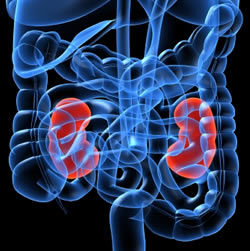
Kidneys can be grown in labs

Scientists claim to have grown kidneys in a laboratory by manipulating stem cells, a major breakthrough which could help tackle the shortage of organs for transplant.
Kidneys can be grown in labs

If true then medical science has taken a big stride forward. British scientists have claimed to have grown kidneys in a laboratory by manipulating stem cells.

There are numerous people in the world who face many health hazards caused by the kidney failures. The main problem most of the doctors face is the shortage of kidney donors. There has always been an extreme shortage of donated kidneys for the patients.

A team at the University of Edinburgh in Scotland has actually used stem cells, which are the building blocks of the body, to form the structure of a kidneys.

Team leader Prof Jamie Davies said: "The idea is to start with human stem cells and end up with a functioning organ. If you have got a bunch of stem cells sitting in a test tube, that's a long way from being a beautifully, anatomically organised organ like a kidney that is a complicated structure.

"So we are working on how you turn cells floating about in liquid into something as precisely arranged as a kidney. We have made pretty good progress with that. We can make something that has the complexity of a normal, foetal kidney but not an adult one yet."

The newly created organs measure half a centimetre in length - the same size as a kidney in a foetus; and, the team hopes the tiny kidneys will be able to grow to maturity after being transplanted into human bodies, 'The Scotsman' reported.

In this process, the scientists claim that the doctors will not face the problems of organ rejection. The rejection of the transplanted organ has been one of the major problems in the success rate of the transplantation.

Thursday, March 31, 2011

Better Mood = Worse Memory

Do you have trouble remembering names at parties? It may be because your having too good a time.

Individuals who have trouble recalling facts that they had just studied or dialogue from a recent conversation may have experienced this type of memory loss because they were in a good mood at the time that they were learning or speaking, according to a recent study that was published in the journal Cognition and Emotion.

Though good mood brings along cheerfulness and positive feelings, it is also linked with forgetfulness, as such a state of mind decreases your working memory capacity. The investigators said they believe that good mood may reduce a person's capacity for working memory.

The ability to remember things may be tied to your mood, finds a new study by Elizabeth Martin, U of Missouri who says that hers is the first research “to show that a positive mood can negatively impact working memory storage capacity.”

While being in a good mood might decrease memory capacity, for the short term at least, it’s not all bad. "Being in a good mood has been shown to increase creative problem-solving skills and other aspects of thinking," says Martin.

Wednesday, March 30, 2011

Ice on Mercury? NASA gets first close-up look at Mercury

MERCURY, the small, hot, innermost planet with an odd sense of time, is about to give up its secrets. A NASA spacecraft now circling Mercury is set to tackle some big mysteries of the scorched, tiny world – including whether or not water ice lurks in its shadowy craters.

In a historic moment for NASA, the MESSENGER spacecraft has delivered the first pictures ever taken from orbit around the planet Mercury. The Messenger spacecraft will capture some 1500 images from the planet Mercury in just three days, as the spacecraft gets down to work as the first probe to ever orbit the planet, NASA said Wednesday (30-Mar-2011).

The Messenger spacecraft, which entered orbit around Mercury on March 17, sent its first images of the hot planet's surface back to Earth early Tuesday. Interestingly MESSENGER stands for MErcury Surface, Space ENvironment, GEochemistry and Ranging.

NASA released the first picture taken of Mercury's surface by the US space agency's orbiting Messenger craft. "Early this morning, at 5:20 am EDT (0920 GMT), Messenger captured this historic image of Mercury," NASA said.

Total Pageviews