Showing posts with label Internet. Show all posts

Saturday, August 6, 2011

Notorious Facebook 'spam king' Sanford Wallace

An American guy charged with sending more than 27 million spam messages to Facebook users has turned himself in. Sanford Wallace, who is known as the Spam King, surrendered to FBI agents in California.
Facebook-spam-detected-arrested-FBI
Sanford Wallace, 43, was indicted in July by a San Jose, Calif., grand jury on three counts of intentional damage to a protected computer and two counts of criminal contempt, according to the U.S. Attorney's Office in the Northern District of California. Wallace allegedly compromised approximately 500,000 Facebook accounts during three separate attacks on the social-networking giant between November 2008 and March 2009.

Wallace gained fame as one of spam's most vocal defenders back in the 1990s and he has faced numerous civil actions over his activities, including lawsuits from MySpace and the U.S. Federal Trade Commission.

However this is the first time he's facing criminal charges.

Wallace appeared in federal court on Thursday (04-Aug-2011) afternoon and was released on a $100,000 unsecured bond. He was again ordered not to access sites like Facebook and MySpace. He is scheduled to appear in court on August 22.

If convicted of all charges, Wallace could face nearly 40 years in prison and fines of more than $2 million.

Wednesday, August 3, 2011

Massive cyberspying across the globe detected

In the biggest ever series of cyber attacks uncovered to date, hackers were found to have broken into networks of the Indian government, United Nations and US defence companies, with security experts pointing to China as the culprit.
2011-August-cyberspace-attack-cyberspying
The security company has said it believes there was one "state actor" behind the attacks but declined to name it, though one security expert who was briefed on the hacking told Reuters that the evidence points to China.

Beijing has always denied any state involvement in cyber-attacks, calling such accusations "groundless,"

The company, McAfee, said it had alerted the 72 targets it identified and also informed law enforcement agencies, which it said were investigating. The 14-page report calls the attacks highly sophisticated and says they appear to have been operated by a government body, which it declined to name.

McAfee said that it had come across the extent of hacking in May and had dubbed the uncovering of the plot as ‘Operation Shady RAT’.

In his 14-page report on McAfee's findings, Dmitri Alperovitch, McAfee's vice president of threat research, asserts that Operation Shady RAT may have cost its victims billions in terms of lost revenues and stolen secrets.

"What we have witnessed over the past five to six years has been nothing short of a historically unprecedented transfer of wealth," he said.

Sunday, July 31, 2011

IE users are dumb, recent study says

If you are yet to ditch Internet Explorer 6, a web browser released in 2001, now is the time to do it. Unless you want to be called dumb.
Internet-web-browsers-online-IE-Firefox-Chrome
Here comes the flame war. According to a new report, dumb people are more likely to use Internet Explorer than smart people.

A survey used tests offered through Web searches or in online ads to measure the IQ of browser users.

  • Internet Explorer users scored lower on online IQ tests than users of other browsers
  • Report says people on the old IE 6 browser scored lowest; Opera users the highest
  • The survey, by a consulting company, wasn't conducted scientifically

It’s also interesting to note that average IQ scores of IE6 users were significantly higher in 2006, and that the IQ scores get better with newer versions of IE.

A company called AptiQuant, a self-proclaimed “world leader in the field of online psychometric testing,” tested the IQs of users and grouped the results according to which browser respondents used.

The survey findings were reported by Jared Newman on PC World with the headline "Internet Explorer Users Are Kinda Stupid" and as his story spread AptiQuant started to receive hate mail from IE users.

Wednesday, July 27, 2011

Hackers ask PayPal users to quit using the service

Hacking group Anonymous is asking PayPal users to "immediately close their accounts and consider an alternative," as a way of protesting the arrests of 14 people tied to a denial-of-service attack on PayPal's website last December. That attack, which brought down the site, was said to be retribution against PayPal for dropping WikiLeaks' donation account.
PayPal-attack-anonymous-2011-July
"PayPal continues to withhold funds from WikiLeaks, a beacon of truth in these dark times," the groups said in a statement.

"We encourage anyone using PayPal to immediately close their accounts and consider an alternative," they said.

"The first step to being truly free is not putting one's trust into a company that freezes accounts when it feels like, or when it is pressured by the US government," they added.

Various Anonymous Twitter accounts are making a call for action. Anonymous Press tweets: "Paypal suspended the closing of accounts online, so call in and close ur account 1-888-221-1161 make sure 2 quote #OpPayPal via@odotm"

Wikileaks is showing support by tweeting: "We support the work of #Anonymous in drawing attention to the economic blockade of #Wikileaks by corrupt financial institutions. #OpPayPal"

So far, however, the campaign may not be having much effect.

"We haven't seen any changes to our normal operations (including account opening and closing) overnight," a PayPal spokeswoman told CNN via e-mail on Wednesday (27-July-2011).

Anonymous wants PayPal users to switch to other similar services.
"Get yourself a slice of MyBitCoin, Liberty Reserve, WebMoney, Neteller, Moneybookers, and start using prepaid credit and gift cards," tweeted allied hacking group LulzSec.

Friday, July 22, 2011

Google Doodle celebrates Alexander Calder's 113th birthday

The latest Google Doodle celebrates the 113 birth anniversary of Alexander Calder, the American sculptor and artist famous for inventing the mobile sculptures and mobile art.
Google-Doodle-Alexander-Calder-2011-July
Two days ago, it was an arrangement of peas. Today (22-July-2011), it's an interesting looking kinetic artwork that has replaced the Google logo, to celebrate the 113th birth anniversary of American artist and sculptor Alexander Calder.

Friday's Google doodle shows a mobile, a type of kinetic sculpture that was invented by Alexander Calder. Mobiles take advantage of the principle of equilibrium and have objects hanging from rods. Kinetic art uses motion for an artistic effect.

Mobiles are usually brightly coloured free-moving creations in abstract shapes made from sheet metal. The mobile Google doodle sways on its own and can also be controlled by mouse gestures.
The Google doodle shows a mobile, a type of kinetic sculpture invented by Alexander Calder.

Google in a blog post confirmed that the Alexander Calder Google Doodle today is the first of its kind, not only because it’s the first Doodle to flaunt a shadow below the search input bar, but the technique used to create it is the modernist way that only an advanced web browser can support all of its hidden and obvious features.

Google regularly replaces its corporate logo with so called Google doodles which celebrate special occasions.

Recently the search engine celebrated music legend Les Paul’s birthday by featured an animated guitar which could be strummed.

Google also marked the 30th anniversary of the arcade game Pac Man by hosting a playable game on its homepage.

Tuesday, July 19, 2011

Google Doodle commemorates Gregor Mendel

Doodles are fairly common commemorating special days. Everyone loves a good Google doodle. Whether it is for something major like Christmas or trivial like Pacman's 30th anniversary, the Google doodle has been an everchanging and entertaining aspect to the search engine.
Gregor-Mendel-Google-Doodle-2011-July
An assortment of peas welcomed users to the Google home page on July 20, 2011.

The search giant paid tribute to Augustinian friar and scientist Gregor Johann Mendel Wednesday, as it marked his 189th birth anniversary with one of its Doodles.

Gregor Johann Mendel (July 20, 1822[1] – January 6, 1884) was a Czech-German Augustinian friar and scientist, who gained posthumous fame as the figurehead of the new science of genetics for his study of the inheritance of certain traits in pea plants. Mendel showed that the inheritance of these traits follows particular laws, which were later named after him.

The significance of Mendel's work was not recognized until the turn of the 20th century. The independent rediscovery of these laws formed the foundation of the modern science of genetics.

Google has set up a team of designers dedicated just for creating wonderful works of art that make our internet browsing a bit more fun.

The first Google Doodle was in honor of the Burning Man Festival of 1998. The doodle was designed by Larry Page and Sergey Brin to notify users of their absence in case the servers crashed.

Subsequent Google Doodles were designed by an outside contractor, until Larry and Sergey asked then-intern Dennis Hwang to design a logo for Bastille Day in 2000. Hwang has been designing the Google Doodles ever since. Clicking on a Google Doodle links to a string of Google search results about the topic, which can drive a lot of traffic to unsuspecting sites.

So far, Google has created over 300 doodles just for Google.com, if we were to include international doodles… it’ll be more than 1000 incredible doodles altogether!

Monday, July 11, 2011

Google Doodle celebrates 450th Anniversary of St. Basil's Cathedral

Google Doodle is back with a new celebration, internet search giant Google on Tuesday (12-July-2011) marks the 450th anniversary of Moscow's Saint Basil's Cathedral with a commemorative doodle on its home page.

Visitors to Google's home page will see an image of the cathedral integrated into Google's familiar logo.

Clicking on the logo will take the visitor to Google search results for St. Basil's Cathedral.

The Russian Orthodox church sits on Moscow's Red Square just yards from the Kremlin, and its distinctive onion domes have been a backdrop for military parades, concerts, New Year celebrations and Muscovites' wedding photos.

This is not the first time that Google featured the St. Basil’s Cathedral in the search engine’s patented Google Doodles. One of the best St. Basil’s Cathedral Google Doodle was featured on December 24th, 2010 alongside other Christmas-centric buildings, natural wonders and places around the world.

Wednesday, June 22, 2011

Google can now translate more Indian languages

Internet search engine giant Google on Tuesday (22-June-2011) announced the expansion of its translation services to include five more Indian languages -- Bengali, Gujarati, Kannada, Tamil and Telugu -- thus increasing its reach to a potential half a million population.

With the inclusion of new languages, the total number of languages supported by Google Translate has risen to 63. Google says these languages are presently in experimental phase, noting that Indian languages are pretty different from English language. It also highlights that the new languages supported by its online translation service are spoken by over 500 million people in India and Bangladesh.

According to Google research scientist Ashish Venugopal, Indian languages often use the Subject Object Verb (SOV) ordering to form sentences, unlike English, which uses Subject Verb Object (SVO) ordering.

"This difference in sentence structure makes it harder to produce fluent translations; the more words that need to be reordered, the more chance there is to make mistakes when moving them. Tamil, Telugu and Kannada are also highly agglutinative, meaning a single word often includes affixes that represent additional meaning, like tense or number," Venugopal says.

Tuesday, June 21, 2011

Summer Solstice 2011 - Google Doodle

Today (21-June-2011) marks the first day of summer in the Northern Hemisphere and as usual Google was one of the first to celebrate.
2011-June-Summer-Solstice-Google-Doodle
When clicking onto the world wide web, users at times will be met with a Google doodle representing a specific date on the yearly calendar, the latest being Fathers Day on Sunday just gone.

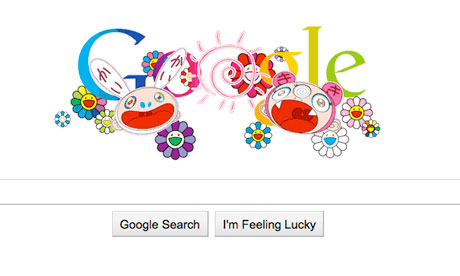
In honor of the Summer Solstice, the longest day of year, Google is celebrating with two homepage doodles from celebrated Japanese artist Takashi Murakami.

What is a midsummer night's dream like? Just ask Japanese artist Takashi Murakami, who's created a fantastical Google Doodle to celebrate the summer solstice.

The brightly colored cartoon, populated by smiling flowers and slightly sinister beasties, commemorates the longest day of the year. “Two super fun, superflat doodles today created by one of our favorite artists Takashi Murakami,” Google trumpeted this morning via Twitter. The other drawing depicts the winter solstice, with happy snowflakes and bunnies with frosty breath.

The summer solstice is the day on which the Earth's northern hemisphere leans closest to the Sun. In the southern hemisphere it takes place in December.

The term solstice is generally used to mean the longest day but it is actually the fleeting instant of proximity when the orbits align.

The time at which the Earth will be closest to the sun is 6.16pm (BST) today (Tuesday 21 June).

The solstice is a Pagan celebration day and believers gather at spiritually significant sites, such as Stonehenge.

Thursday, June 16, 2011

Google Doodle celebrates Lunar Eclipse - June 2011

Google put up an interactive Doodle on its homepage to celebrate the June 15 midnight lunar eclipse – the longest and darkest eclipse of the century – where one of its O's was replaced by an almost live image of the moon.
2011-June-Google-Doodle-celebrates-Lunar-Eclipse
The lunar eclipse turned the moon blood red on Thursday (15 to 16-June-2011), yielding a rare visual treat for stargazers across a large swathe of the planet from Australia to Europe.

The first eclipse of the year — when the Earth casts its shadow over the moon — was seen in parts of Europe, Africa, Asia and Australia.

To celebrate the longest total lunar eclipse in 11 years, Google has created this Doodle showing real-time footage of the Earth casting a shadow across the moon.

The live Doodle depicts the 100-minute-long eclipse with footage from around the globe and is reportedly updating every two minutes.

Announcing the new Doodle, a post on the official Google blog reads: "If you visit the Google homepage you’ll see a special interactive doodle, which will update throughout the day to show the latest state of the moon."

Friday, June 10, 2011

Fake Anti-Virus Imitates Microsoft Update

Sophos, the IT security and data protection firm, has released a new warning regarding a fake anti-virus attack. The specialty of this is that it masquerades as Microsoft's security update and tricks the user into installing malicious software.
fake-anti-virus-microsoft-update
According to Sophos, criminals are looking for increasingly convincible ways to persuade consumers to download fake antivirus and copying Microsoft's own security seems to be their latest trap.

"We are seeing the criminals behind fake antivirus continuing to customise their social engineering attacks to be more believable to users and presumably more successful," said Chester Wisniewski on the Sophos blog.

"This week they've started to imitate Microsoft Update." According to Sophos, the drive-by page is an exact replica of the real Microsoft Update page, but only appears on Firefox.

"It only comes up when surfing from Firefox on Windows," said Wisniewski. "The real Microsoft Update requires Internet Explorer."
browser-warning
The use of high quality graphics and professional interfaces means more users are likely to fall for the scam, says Sophos.

"Users need to be more vigilant than ever before, as bogus security alerts pop-up in their browsers," says Graham Cluley, senior technology consultant at Sophos.

Just like visiting one's bank one should only trust security alerts in the browser if one initiated a check with Microsoft, Adobe, Sophos or any other vendor for updates to their software.

Fake anti-virus attacks are big business for cybercriminals and they are investing time and effort into making them as convincing as possible, Graham Cluley says.

Thursday, June 9, 2011

Google's doodle lets you play and listen on 96th birthday of Les Paul

Les Paul, the electric guitar pioneer, has been celebrated on his 96th birthday by one of Google's most complex doodles – a playable and recordable 'guitar'.
Les-Paul
Les Paul had one of the most colorful and diverse careers in the history of the entertainment industry. During his 80 years on stage and screen and in the studio, Paul was a solo performer, jazz bandleader, big band guitar chair, virtuoso sideman, pop tunesmith, radio personality, TV star, engineer producer, six-string eminence and inventor. In the latter role, the solid body guitar model that bears his name, multi-track recording and the harmonica holder are among his best-known creations.

In 1915, Les Paul, one of the most influential guitarists in pop music history, was born in Waukesha, Wisconsin. With his wife Mary Ford, he had a string of hits in the late 40's and early 50's including, "Mockin' Bird Hill," "How High the Moon" and "The World is Waiting for the Sunrise." Those recordings were among the earliest to use multi-tracking.

Paul also designed guitars which were marketed by the Gibson company and became the favourites of pop, rock and country musicians. He also built the first eight-track tape recorder, which helped pioneer multitrack recording. And he invented "sound-on-sound" recording, which has since become known as overdubbing. Paul was inducted into the National Inventors Hall of Fame in 2005. He died on Aug. 13, 2009 of complications from pneumonia at age 94.
Google-Doodles
The Google doodle in honour of Les Paul is playable by hovering the cursor over the doodle.

Google has now become more frequent with animated and interactive doodles. Of the last 10 Google doodles, five included animations or were interactive.
The Google doodle had first gone interactive in May 2010 to celebrate the 30th birthday of the popular Pac-Man game.

For a dozen years, Google has been occasionally swapping its everyday logo for a doodle. The Google doodles, an artistic take on the Google logo, have gained immense popularity over the past few years and the Google doodle team has put out commemorative doodles on numerous events of international or national importance, ranging from news events, civic milestones, birthdays, death anniversaries and important dates in history.

Google estimates it has created more than 900 doodles since 1998, with 270 of them running in 2010. Some appear globally, and others are tailored for local markets.

Wednesday, June 8, 2011

Twitter Rolls out Automatic URL Shortening

Microblogging site Twitter has finally fulfilled users' longtime wish. The company has introduced an automatic URL shortner.
Twitter
The social notworking web site has been missing this feature ever since it launched and, although many third party providers have stepped up to fill the void, some users have preferred the idea of staying within the Twitter environment and just posted shorter messages instead.

Hereafter, the users can paste a link of any length into the message composition box on the site, according to a company blog post.

Links of any length will be cut down to a tidy number of characters — 19, to be precise — and an ellipsis when the sender clicks the Tweet button.
Twitter
Although each link is assigned a unique t.co link ID, the links will appear on Twitter as abbreviated versions of their originals so users always have some idea of where their next click will take them — a smart move on Twitter’s part given the number of URL-shortened spam or scam links that have made the rounds on the microblogging platform over the past year or so.

Still, you can expect to see plenty of other URL shorteners floating around Twitter — especially ones like Hootsuite that give their users a full analytics rundown for each link. Twitter said users can still use any third-party link-shortening services on Twitter.com.

Twitter's link service is only used on links posted on Twitter and is not available as a general shortening service.

The company emphasized the security aspects of its new service. URLs converted by Twitter's link service are checked against a list of potentially dangerous sites, and when there's a match, users will be warned before they continue, says Twitter.

World IPv6 Day - Google and Facebook warn internet users

Google and Facebook have warned internet users to expect 'teething pains' on Wednesday (08-June-2011) as leading internet companies test drive a new global numbering system for cyberspace.
World IPv6 Day
Wednesday 8 June 2011 is World IPv6 Day, which means around 200 organisations, including Google, Facebook and Yahoo, will offer content over IPv6 for a 24-hour trial.

Many in the industry are seeing the trial, which is supported by the Internet Society, as a "wake-up call" for organisations to prepare for IPv6 to ensure a smooth transition as IPv4 addresses run out.

"The goal of the Test Flight Day is to motivate organisations across the industry – internet service providers, hardware makers, operating system vendors and web companies – to prepare their services for IPv6 to ensure a successful transition as IPv4 addresses run out," explained the Internet Society about the day.

The old system could handle several billion addresses. IPv6 has room 340 undecillion of them. That's 34 followed by 37 zeros -- enough for every human on Earth to have trillions of personal gadgets.

But the two systems aren't easy to integrate; they're essentially parallel, independent networks. Internet service providers, operating system manufacturers, browser developers and website operators have been working for several years on the extensive technical changes needed for the switch. Today's experiment is the first global road test of their work.

The transition from IPV4 to IPV6 will free up more than 4 billion new web addresses.

Friday, June 3, 2011

Google joins hands with Bing and Yahoo for better search results

Search engine company Google and its competitors, Bing and Yahoo, have teamed up to promote a new indexing standard for websites. According to an AFP report, the companies hope to improve search results with the common format of tagging content.

When the top three Internet search providers work together on a project, the web pays attention. On Thursday (02-June-2011), Google, Bing, and Yahoo introduced schema.org, a resource for website owners and developers that want to add markup to their pages.

"We are announcing schema.org, a new initiative from Google, Bing and Yahoo to create and support a common vocabulary for structured data markup on web pages," Google said in its blog.

With schema.org, site owners and developers can learn about structured data and improve how their sites appear in major search engines. The site aims to be a one-stop resource for webmasters looking to add markup to their pages.

By promoting the use of these common tags across the Web, Yahoo, Microsoft and Google expect that their search engines will be better able to identify, crawl and index structured data.

Monday, May 30, 2011

Internet Explorer 9 now available in Indian languages

Microsoft Corporation India Pvt. Ltd. announced the availability of Internet Explorer 9 in 53 additional languages, including 11 Indian regional languages, specifically, Assamese, Bengali, Gujarati, Kannada, Konkani, Malyalam, Marathi, Oriya, Punjabi, Tamil and Telugu.

Microsoft may well be a late entrant in this space behind Google Chrome and homegrown browser Epic that is built specially for the Indian market.

With this launch, a wider audience base will have access to Internet Explorer 9 in their native language. Consumers can download Internet Explorer 9 in a language of their choice by visiting www.windows.microsoft.com/en-US/internet-explorer/downloads/ie-9/worldwide-languages.

The availability of Internet Explorer 9 in Indian regional languages is part of Microsoft’s ongoing efforts to promote local language computing in India, thereby taking IT to the masses.

Monday, May 23, 2011

Mozilla releases Firefox 5 beta for testing

Mozilla has released the first Firefox beta under its new rapid-release model: a program designed to ensure more frequent updates to the browser at the expense of huge, sweeping changes between new Firefox versions.
Mozilla releases Firefox 5 beta for testing
Mozilla has three main versions of Firefox now: the release version for mainstream users, the beta version with new features under testing, and the most raw, Aurora, a version to introduce those new features. Those three versions correspond to Chrome's stable, beta, and dev releases. There's also a nightly Firefox build for those who want to try whatever patches have arrived in the last 24 hours, but it's most likely to be unstable.

Firefox 5 is slated to wrap up on June 21.

Firefox 5 contains many more under-the-hood changes than Mozilla called out, however. The company listed 1,053 stability and other fixes in the detailed release notes accompanying the preview.

Firefox 5's user interface is identical to its predecessor, Firefox 4, which launched two months ago.

Thursday, May 12, 2011

Facebook profile access 'leaked'

Access to hundreds of thousands of Facebook accounts may have accidentally been leaked because of a flaw in some applications.

Security firm Symantec discovered that programs were inadvertently sharing access tokens which could be used by advertisers.

It estimates that, as of last month, 100,000 applications were still enabling leaks.

The flaw, which is fixed now, affected hundreds of thousands of apps before it was discovered by researchers from security company Symantec.

The bug exposed user access tokens to third parties, like advertisers and analytic platforms. The tokens serve as a spare set of keys that Facebook apps use to perform certain actions on behalf of the user or to access the user’s profile. Each token is associated with a select set of permissions, like reading your wall, accessing your friend’s profile, posting to your wall, and so on.

Facebook said that it was improving authentication methods.

"We have been working with Symantec to identity issues in our authentication flow to ensure that they are more secure," Facebook's Naitik Shah wrote in a blog post on Tuesday.

So how did this happen? Well, Facebook by default uses OAUTH2.0 for authentication.

That being said, it looks like the company has not been regularly testing its older authentication schemes, which are still supported and used by hundreds of thousands of apps.

Facebook is now working with third-party developers help migrate them to the OAuth 2.0 system.

Facebook has more than 500 million users and is challenging Google Inc and Yahoo Inc for users' time online and for advertising dollars.

Friday, April 15, 2011

Google Pays Tribute to Charlie Chaplin with a Doodle

The birth of Sir Charles Spencer “Charlie” Chaplin, the English comic actor, film director and composer best known for his work during the silent era, has been celebrated by the search engine Google.
CharlieChaplin
Chaplin, born in London on 16 April 1889, was also well known for his oversized trousers and shoes, bowler hat and toothbrush moustache, with The Tramp who features as a tribute act in the video, his most popular character.

Google is celebrating Charlie Chaplin's 122nd birthday, one day in advance, with a Google Doodle in video format, that stars a lookalike of The Little Tramp in a Google-themed act very similar to original Charlie Chaplin shorts.
CharlieChaplin
Google, the world’s most popular and most visited website is known for its celebration of special days and occasions but has only rarely featured a video doodle on its homepage.

The Google doodle had first gone interactive in May 2010 to celebrate the 30th birthday of the popular Pac-Man game. Then on October 8, 2010, Google celebrated John Lennon's birthday, a day in advance, with an innovative doodle that played a 32 second clip of Imagine, considered to be the singer-songwriter's most popular song.

For a dozen years, the search engine has been occasionally swapping its everyday logo for a doodle, a sketch celebrating holidays, inventions, artists and sporting events, and showcasing designs from contest-winning students.

So go ahead, click on the doodle and enjoy Google's tribute to Charlie Chaplin.

Saturday, April 2, 2011

LizaMoon SQL Injection Attack Hits Websites

Have you heard the scary news about 'LizaMoon,' a malicious code attack that has already infected more than a million websites? Don't panic.

More than one million website addresses have been compromised by a sophisticated hacking attack that injects code into sites that link to a fraudulent software sales operation. Hi-tech criminals seem to have perpetrated the attack by using security loopholes to insert malicious code into websites.

No need to panic, though. A little information and common sense are all you need to make sure that LizaMoon is nothing more than a minor annoyance.

Websense, a content security company, says it first discovered the attack, which it dubbed Lizamoon, late last month, and informed others.

The scareware sends users to a bogus Web page warning them that their PCs are infected with malware and tries to sell them an anti-virus application.

Total Pageviews